What happened before?
Look for possible triggers. There’s no need to blame yourself—you’re gathering information.

Your body is asking for less right now.
Start here. Choose whatever feels easiest.
You don’t have to do everything below. Pick what feels manageable right now.
Sit back or lie down somewhere safe. If it feels comfortable and is appropriate for you, prop your feet up. Use pillows, a bed or a chair to reduce the work of holding yourself upright.
Start comfortable. Adjust from there.Dim the lights. Lower the television or music. Reduce conversation, close your eyes and move away from strong smells if you can. Give your brain fewer things to process.
Start comfortable. Adjust from there.Move toward shade, air conditioning or the coolest room available. Try a ceiling, floor or handheld fan. Gentle airflow across damp skin can feel especially refreshing.
Start comfortable. Adjust from there.Try a cool washcloth, comfortably cool water on your face, a cooling wrap, refrigerated massage stones, or resting your feet in cool water. Protect your skin and stop if anything becomes painful, numb or uncomfortable.
Start comfortable. Adjust from there.Sip rather than forcing a large amount at once. Follow the fluid, electrolyte and sodium recommendations that are appropriate for your own medical needs.
Start comfortable. Adjust from there.If this episode is new, unusually intense, rapidly worsening, or includes new confusion, fainting that does not resolve as usual, significant trouble breathing, chest pain, signs of heat stroke, or new neurological symptoms, it may need medical care—not another home strategy.
Trust a change that feels important. When in doubt, contact a clinician, urgent care or emergency services as appropriate.
The goal isn’t to make yourself freezing. The goal is to help your body become comfortable.
Try a cool washcloth, comfortably cool water, a cooling wrap, refrigerated stones or resting your feet in cool water.

You do not have to get back up just because you are starting to feel better. When you’re ready, look backward.
Look for possible triggers. There’s no need to blame yourself—you’re gathering information.
Notice nausea, flushing, headache, brain fog, heavy legs, a racing heart or suddenly needing to sit.
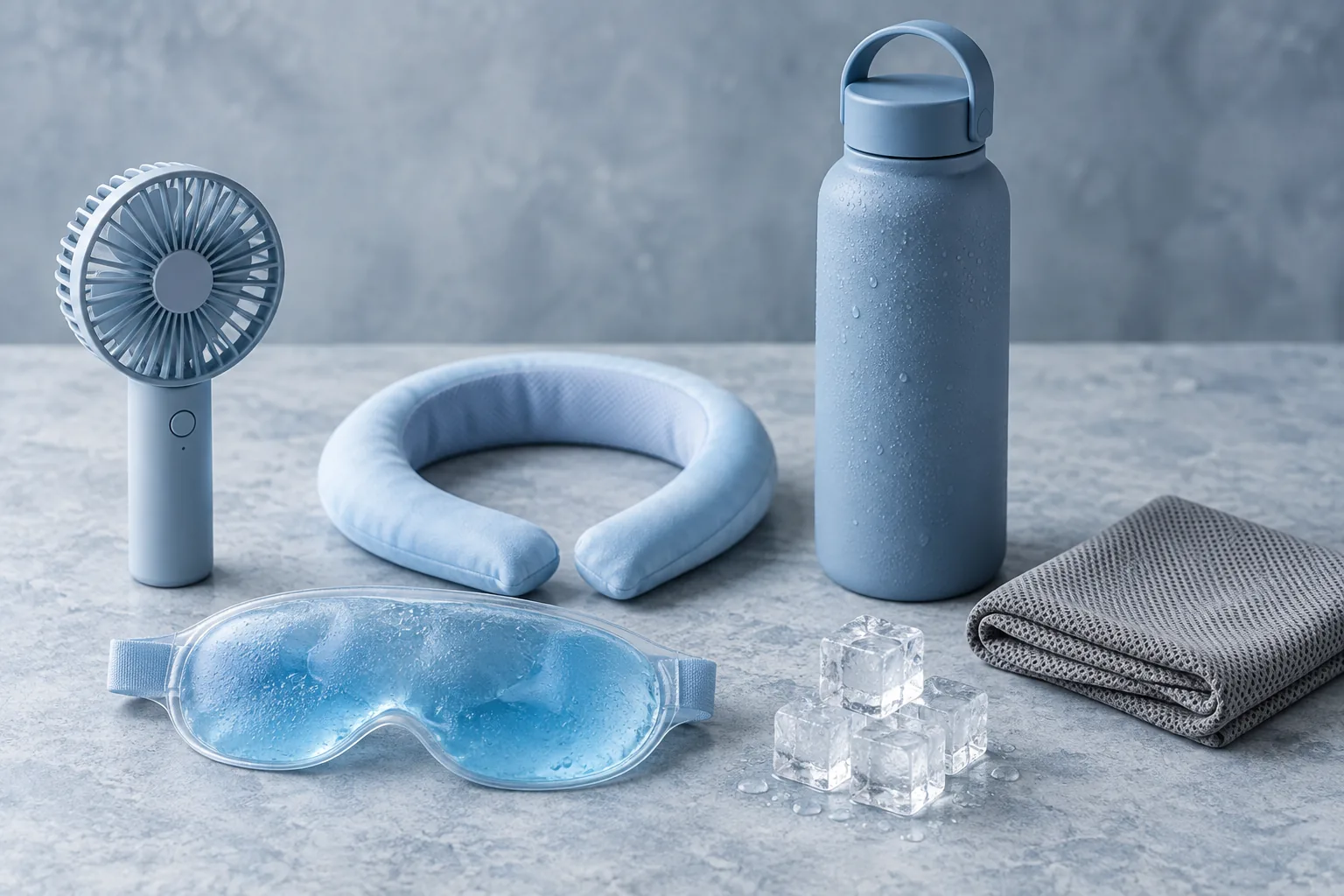
Keep the things you reach for together, so they’re ready when you need them. Preparation is kindness toward your future body.
Consider one for home, work, your car or your everyday bag.
Choose a cooler seat, plan shade, bring a fan, change the time or shorten the exposure.
Do not only plan the activity. Consider what your body may need afterward.
You do not need to understand the physiology to use these tools. When you’re ready, understanding the “why” can make adapting easier.
Being upright adds a gravitational challenge. Heat also widens blood vessels near the skin, which can worsen pooling for some people. Reclining and supporting your body may reduce the compensatory work required to maintain circulation.
Heat moves blood toward the skin to release warmth. For someone with orthostatic intolerance, that can leave less circulation available centrally and make upright symptoms harder to manage.
Warmth, standing and the effort of washing can combine several demands at once. A shower chair, cooler water, ventilation and a planned rest afterward may help.
Extreme cold can be painful, startling or overstimulating. Comfortable cooling lets you notice your response and adjust without adding another intense sensation.
This prototype offers general education and is not a diagnosis or a replacement for individualized medical care.
These resources provide more context about dysautonomia, heat intolerance, hydration and the difference between an uncomfortable flare and a heat emergency.
A clinical overview of POTS, common triggers—including heat—and individualized management approaches.
Read the overview →Cleveland ClinicPractical clinical guidance covering temperature consistency, cooling tools, hydration and provider-directed sodium intake.
Open the guide →Centers for Disease Control and PreventionHow to recognize heat exhaustion, heat syncope and life-threatening heat stroke—and what action each requires.
Review the warning signs →NIH · MedlinePlusSymptoms, prevention and why individual fluid needs—and electrolyte considerations—can differ.
Learn about dehydration →CDC Yellow BookClinical detail on heat syncope, heat exhaustion, rehydration and when severe symptoms require emergency care.
Read the clinical guidance →NHSA clear comparison of symptoms, immediate cooling steps and signs that call for emergency help.
Compare the symptoms →Fluid and sodium advice is not one-size-fits-all. Follow the plan your clinician recommends, especially with heart, kidney, blood-pressure or electrolyte conditions, or medicines that affect fluid balance.
Check in. Then choose.
Try something. Notice what happens.
Keep what helps. Discard what doesn’t.
Adapt as needed.Back to all support