Headache or pressure
Lower light, sound, heat and screen exposure. Recline if upright symptoms are contributing. Try a cool cloth, hydration according to your plan, and your prescribed migraine strategy.
You do not have to solve the entire cause in this moment. Begin by making your body safer, better supported and a little less burdened.
The right response depends on the pain. Open one option that feels manageable rather than trying everything at once.
Pause the task. Support your head, limbs and joints so your muscles do not have to keep holding everything up.
Try a comfortably warm or cool—not extreme—tool based on what has helped this kind of pain before. Protect your skin and use a timer.
Let your jaw soften, lower your shoulders, open your hands or lengthen your exhale. Do not force relaxation or stretch into pain.
Let the breath stay comfortable and unforced. Try breathing in gently, then allowing the exhale to last a little longer. Stop if focused breathing increases dizziness, tingling or air hunger.
Reposition, add a pillow, roll a towel, loosen a seam or remove an irritating brace. Small pressure changes can matter.
Use prescribed or personally safe medication and devices according to your established plan. More is not automatically better.
Seek urgent care for a sudden “worst” headache; headache with weakness, numbness, confusion, seizure, stiff neck, high fever, vision or speech changes; new chest pressure; severe abdominal pain; a cold, pale or blue limb; major injury or deformity; rapidly increasing one-sided swelling; loss of bladder or bowel control; new saddle numbness; or pain with fainting, severe breathlessness or rapidly worsening symptoms.
These categories can overlap. They are starting points—not diagnoses.
Lower light, sound, heat and screen exposure. Recline if upright symptoms are contributing. Try a cool cloth, hydration according to your plan, and your prescribed migraine strategy.
Support the area first. Gentle warmth, small comfortable movement, position changes or light self-massage may help. Sudden severe cramping or swelling deserves a different response.
Stop forcing the range. Return toward a neutral supported position, reduce load and use an individually fitted brace, splint or tape only as instructed. Do not force a suspected dislocation back into place.
Reduce rubbing, seams, temperature extremes and pressure. Check the skin—especially if sensation is reduced. New or spreading nerve-like symptoms deserve clinical evaluation.

A dark or softly lit room, fewer sounds and smells, a cool cloth and comfortable head-and-neck support may reduce added sensory demand. If upright posture worsens the headache and lying down reliably improves it, document that pattern and discuss it with a clinician.
Muscles feel guarded, tight or achy and warmth has helped this pattern before. Use comfortable heat through a protective layer, set a timer and avoid falling asleep on a heating device.
An area feels hot, newly irritated or throbbing, or cool is part of your headache plan. Wrap cold packs, keep sessions brief and stop for numbness, color change or increasing pain.
Sensation or circulation is impaired, skin is injured, the reaction is unclear, or temperature reliably worsens your dysautonomia. Support and repositioning may be the gentler first choice.
Comfort can come from rhythm, pressure, warmth and support—not only stretching.
Choose one comfortable muscle group. Add a small amount of tension without holding your breath, then release fully and rest. Skip injured, cramping or unstable areas, and stop if pain rises.
A weighted blanket, lap pad or strategically placed pillows may soothe diffuse achiness. Use the lightest useful pressure, keep breathing and movement unrestricted, avoid unstable joints, and make sure you can remove it easily.
A comfortably warm bath may relax guarded muscles. Epsom salt is optional: evidence that magnesium is absorbed through the skin or adds pain relief is limited. Avoid very hot water, plan for getting out safely and account for heat-triggered dysautonomia.
Hands, a soft ball, massage cane or other tool can provide short-term comfort. Use light pressure first; avoid the front or side of the neck, suspected clots, acute injuries, inflamed skin, unstable joints and areas with reduced sensation.
Try a little. Rest. Notice the response. Comfort does not need to hurt to count.
Pillows, rolled towels, athletic tape, splints, braces, compression and mobility aids can reduce the work of holding a painful area—but more restriction is not always more support.
With hypermobility or instability, repeated deep stretching may add irritation. Find a comfortable middle range and build control with individualized guidance.
Athletic or kinesiology tape can provide useful sensory feedback and targeted support when the correct muscle group, direction, joint position and tension are understood. Ask a knowledgeable PT or OT to teach a repeatable method. Patch-test adhesive, never wrap tightly around a limb, and remove it for burning, itching, numbness, swelling or color change.
A support that pinches, causes numbness, changes skin color or shifts load somewhere painful needs reassessment.
A brace, tape or mobility aid may be useful for one flare, one task or one season. Today’s support does not decide tomorrow’s capacity.
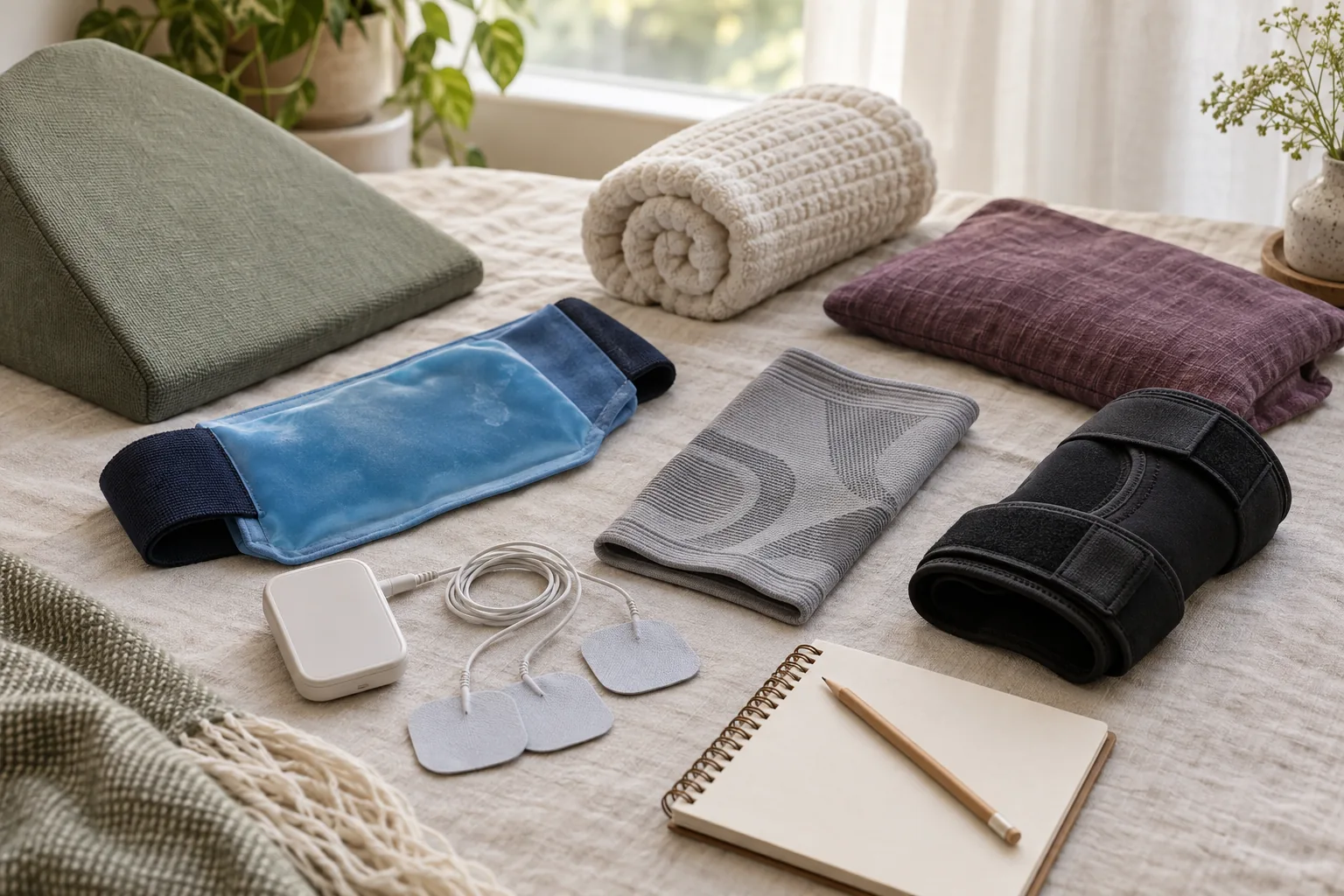
Keep a few individually safe options together: positioning supports, a cloth-covered warm or cool pack, approved brace, athletic tape or compression, low-irritation clothing, prescribed medication, and a note describing what usually helps.
TENS may help some pain patterns, but it is not appropriate for every person or placement. Follow the device instructions and ask a clinician about implanted electrical devices, reduced sensation, pregnancy, broken skin and any heart-rhythm concerns.
You are looking for patterns—not building a case against your body.
Pressure, throbbing, burning, pulling, sharpness, aching and tenderness may point toward different conversations and tools.
Notice posture, activity, temperature, sleep, hydration, meals, hormones, illness, sensory load and medication timing.
Record delayed pain or a next-day flare, not only the response during the activity.
Track the position, temperature, support, dose or environmental change that made a meaningful difference.
It can cancel plans, change how touch feels, shorten conversations and make explaining yourself feel like another task. Needing less contact in a painful moment does not mean you need less care.
You can need solitude and still deserve to feel remembered.
Muscle guarding, joint instability, migraine, nerve signaling, injury, inflammation, poor sleep, sensory load and sustained upright effort can overlap. A strategy that helps one mechanism may irritate another.
External support can reduce the muscle work required to hold a position and may limit repeated movement into an irritated range.
Neuropathic pain can alter sensory signaling so normally non-painful touch feels painful. Protect the skin while also seeking evaluation for new or progressing symptoms.
Irritated tissue, muscle fatigue, nervous-system sensitization or post-exertional symptom worsening may appear later. The delayed response belongs in your activity plan.
Location, quality, timing, associated symptoms and change from your usual pattern often provide more useful information than a number alone.
This page offers general education, not a diagnosis or personalized pain-treatment plan. Persistent, recurrent or function-limiting pain deserves clinical attention.
Support first. Soften the demand.