I have some capacity
Use it intentionally without spending all of tomorrow’s energy.
A personal story about pushing through, becoming more depleted and finally learning to adapt—each day, each hour and one moment at a time.
Read my story ↓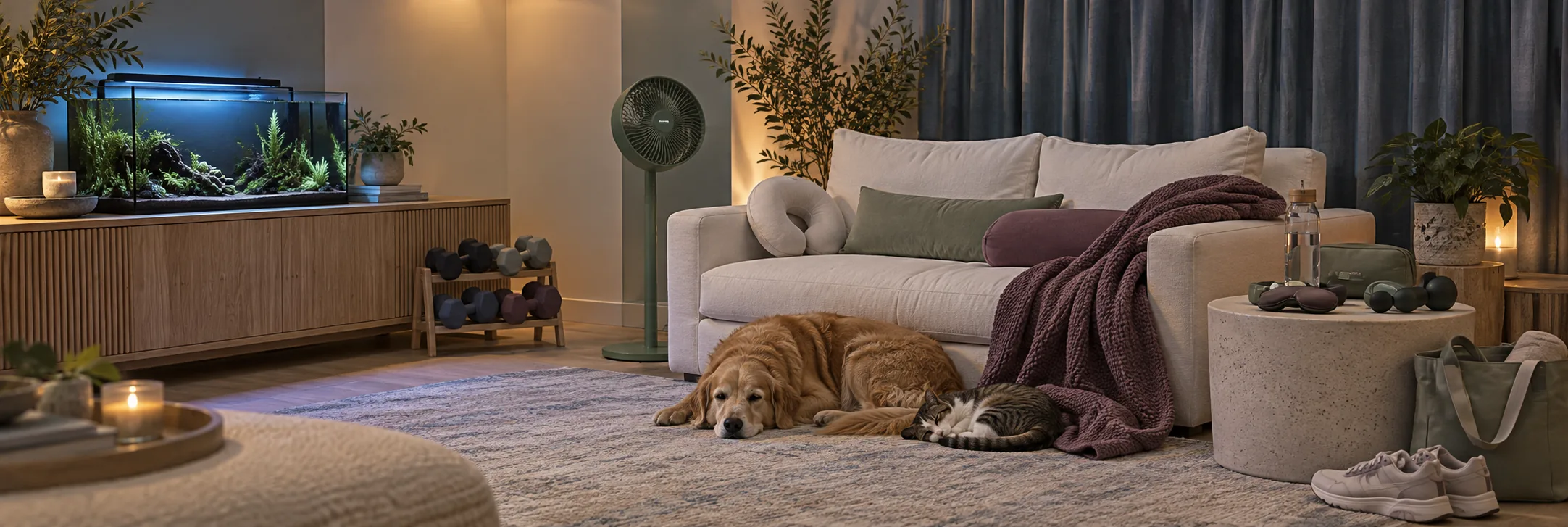
I pushed through pain, exhaustion, dizziness and every signal telling me to stop. I believed that if I tried harder, stayed stronger or refused to give in, I could force my body to keep up.
I only got worse.
Determination cannot replace circulation, sleep, temperature regulation or physical capacity. Ignoring those limits does not make them disappear. Sometimes it only makes the recovery longer.
I never knew a person could feel this depleted. I did not know you could be completely exhausted and still go days without restorative sleep. I did not understand how quickly the hot sun touching my skin could make it feel as though the energy were draining directly out of my body.
For a long time, I questioned myself, compared myself to other people and tried to convince my own mind that I should be able to do more.
I had to stop gaslighting myself.
Now I try to listen. I use breathing practices throughout the day—not because breathing cures dysautonomia, but because slowing down and reconnecting with my body helps me notice what is happening before I push beyond my limits.
I no longer expect every day—or every hour—to offer the same capacity.
Use it intentionally without spending all of tomorrow’s energy.
Make it shorter, smaller, seated, cooler or better supported.
It may take an hour, a day or even weeks after I have pushed too far.
Let someone share the weight before the body forces a stop.
Prepare when you can. Adapt when you need to. Recover before you are empty.
I have no regrets.
For years, I could not understand why I was unable to stand after a shower to do my hair and makeup. Now I sit for both.
The goal was never to prove that I could stand. The goal was to get ready without spending all the energy I needed for the rest of the day.
The goal is to complete personal care safely while preserving capacity for the life that comes afterward.
Use the stool for the whole shower—not only an emergency
Control water temperature and ventilation
Keep toiletries within seated reach
Sit for hair, makeup and getting dressed
Prepare clothing before the shower
Leave room to recover afterward
Some days I can manage light, noise, movement and a busy environment. Other days, the same input is painful, disorienting or completely overwhelming. Sometimes that change happens gradually. Sometimes it happens in an instant.
A store that felt manageable when I walked in can suddenly become too bright, too loud and too visually busy. Even daylight through a car window—or sunlight on a cloudy day—can become difficult to tolerate.
I am not trying to shut out the world. I am giving my body a quieter version of it until I can recover.
I know my peak hours—the part of the day when I have the best chance of thinking clearly, being upright and participating. I also know when I typically begin to crash.
When possible, I place appointments, errands, phone calls and mentally demanding tasks inside that more reliable window. I leave space before and afterward because the appointment is not the only demand. Getting ready, traveling, waiting, explaining my symptoms and returning home all require energy too.
I do not schedule around what an ordinary day is supposed to look like. I schedule around the body I actually live in.
Some specialist appointments take months to obtain. I have waited six weeks—or much longer—only to wake up in a flare on the morning of the appointment and realize that I cannot safely or physically get there.
Missing an appointment because I am too sick to attend an appointment about being sick is one of the crueler contradictions of chronic illness.
I use online portals to send focused updates, ask questions, request refills and document changes while they are fresh. When appropriate, I ask whether a visit can become telehealth. Remote care cannot replace every examination, test or procedure, but sometimes it is the difference between receiving care and losing the appointment entirely.
Ask whether telehealth is appropriate
Use the portal for focused updates and questions
Keep a current medication list
Bring a brief symptom timeline
Prioritize questions before the visit
Ask about cancellation lists and accessibility needs
Portal messages are not emergency services. New or severe symptoms require the level of care recommended by the medical team or local emergency guidance.
I keep a medical bag with me and supplies in the car. I plan for pain relief, temperature changes, hydration, medication needs and the possibility that my body may require a different plan than the one I imagined.
I let people know in advance that I genuinely hope to be there—but the day may come and my body may not be able to do it. Sometimes I take an Uber because driving is not the safest or most manageable choice. Some days I can plan an entire holiday party. Other times I have to cancel it the day before because I simply cannot carry it through.
It sucks.
Adaptation does not mean pretending that loss is beautiful. It means facing what is true and choosing the support that gives me the best chance of continuing.
Weather, heat and direct sun
Parking and total walking distance
Seating, shade, elevators and bathrooms
A shorter version of the plan
Separate transportation or a safe ride home
Enough capacity for the return and recovery
I have learned to work from home, adapt household chores and lean on my family. I read ingredients, cook at home more often and choose high-quality, nourishing foods as the foundation of my diet when my body allows it.
Remote work, a supportive setup, breaks before the crash and written systems help me use cognitive energy more intentionally.
I sit, divide tasks into smaller zones, use lighter tools, leave something unfinished or ask someone else to own the entire task.
Autonomy does not require doing everything alone. It includes choosing where support protects the energy I want to spend elsewhere.
Prepared ingredients, familiar foods, batch cooking and frozen portions help me nourish myself without pretending every day has the same kitchen capacity.
There are times when I need what I call decompressing my nervous system. If that means being in my nest, surrounded by my pets and the family or friends who feel safe, that is where I go whenever possible.
I gather the things that help my body feel supported: pillows, a heating pad, a massager, an eye mask and headphones. Sometimes I carefully rest dumbbell weights across my legs because the steady pressure feels grounding to me.
I have learned that the quality of pillows, blankets, body supports, therapy tools and the place where I recover matters. Being slumped over a screen while every muscle keeps working is not the same as being fully supported.
What looks like self-indulgence is often how I reduce strain, pace, recover and create the conditions my body needs to become steadier.
Comfort is not a reward I have to earn after I collapse. It is one of the tools that may help prevent the collapse.

Not because I literally cannot walk.
I am considering it because standing in one place for more than ten minutes can bring me close to passing out. Walking is possible, but remaining upright for hours is not always sustainable.
I have not stopped wanting family outings, experiences or vacations. But wanting to participate does not make my circulation behave differently.
A wheelchair could allow me to remain with my family longer. It could preserve energy for conversation, connection and the experience itself instead of spending nearly everything on remaining upright.
A wheelchair would not erase my ability to walk. It would support my ability to participate.
Mobility aids are not only for people who cannot walk. People may use them because walking is painful, unsafe, severely limited or physiologically expensive. Some use them every day; others use them for long distances, airports, events or flare days.
If I choose one, I want to choose it thoughtfully—with attention to fit, posture, propulsion, transport, weight and how I would use it. A rehabilitation clinician, physical therapist, occupational therapist or qualified mobility professional can help prevent an unsuitable chair from creating new strain.
What I need today does not predict what I will need forever. But I should not have to sacrifice today’s life to prove that I can still walk.It is what became possible after I stopped abandoning myself.
I am still ambitious. I still make plans. I still want a meaningful, beautiful life. I simply no longer believe that harming myself is the price I must pay to participate in it.
None of these changes happened all at once. I resisted some of them. I grieved some of them. I needed time to understand that accepting help was not the same as surrendering my life.
Fighting will not make this better.
Adapting can.
Different terrain. A life that still belongs to you.