Pause · choose · comfort · return

Make this moment gentler.

You do not have to fix the feeling or explain everything right now. Choose the sensory input that fits your body and mind in this moment.

Choose what feels possible
Start with permission

Comfort is not self-indulgence.

It is self-regulation when practiced as needed. You are allowed to support yourself before the moment becomes unbearable.
What would ask less of you?

Choose your sensory input.

There is no correct choice and no required order. Notice what your body and mind want, then open only the option that fits.

Quiet or familiar sound?

Reduce sound completely, choose one familiar voice, or play a steady background sound. The best sound is the one your nervous system does not have to work to understand.

Warmth or coolness?

Try a cooling blanket or cloth, a warm wrap, fresh air, or a change of room. Comfort—not a dramatic temperature shift—is the goal.

Weight or softness?

Rest a compact weighted pad across your lap or legs, hug a weighted pillow, or choose a soft fabric with no pressure at all.

Stillness or rhythm?

Be completely still, rock gently, sway, hum, tap a slow beat, or let a familiar song provide the rhythm.

Company or privacy?

Invite a calm person or willing pet to stay nearby, or give yourself permission to be alone without explaining.

Expression or distraction?

Name what you feel, write one sentence, cry, or choose a familiar show, audiobook or simple task until there is more room to process.

You may step away

You do not owe anyone a full explanation.

Politely excuse yourself, reduce the demand and focus on support. A short sentence is enough.

“I need a quiet minute.”

“I’m going to step away and take care of myself.”

“I don’t need to explain right now. I’ll check back in later.”

“Quiet company would help.”

Build a softer moment

A practical soothing toolbox.

Choose one small support. Layer another only if it helps.

Sound + familiarity

Choose a familiar show, song or audiobook; open a window for natural sounds; or try white, pink or brown noise at a comfortable volume. Labels such as green or black noise vary by app and are not standardized—follow your preference, not a promised frequency cure.
Weight + support

A small lap pad, compact weighted blanket across the legs, or weighted pillow may feel grounding and can be easier to lift or carry than a full-body blanket. You should always be able to remove and reposition it yourself. Keep weight away from the face and neck, and skip it if it restricts breathing, circulation or movement, or increases overheating.

Fabric + temperature

Change anything scratchy, tight or damp. Reach for a cooling blanket, smooth cotton, a soft sweater, warm socks or a light layer—whatever makes your skin ask less of you.

Pets + quiet company

A familiar pet can offer warmth, rhythm and companionship when the animal also wants contact. A trusted person can simply sit nearby. Quiet company counts; neither of you has to perform.

Scent + atmosphere

If scent feels good today, use a preferred candle or aromatherapy lightly and with ventilation. Skip it when scents trigger migraine, asthma, nausea or sensitivity. Keep flames attended and essential oils away from pets; never apply oils to an animal.

Touch + gentle rhythm

Massage your hands, feet or scalp; soften the jaw and temples; use a massage ball; or try slow rocking, humming or tapping. Avoid pressing or massaging the front or sides of the neck. This is comforting touch—not a medical vagus-nerve treatment.

Give attention somewhere safe

Familiar can be regulating.

Return to a show you know, one trusted song, a gentle audiobook, a simple wooden puzzle, coloring, sorting or another repetitive task. Safe distraction can create breathing room; it does not mean you must avoid the feeling forever.

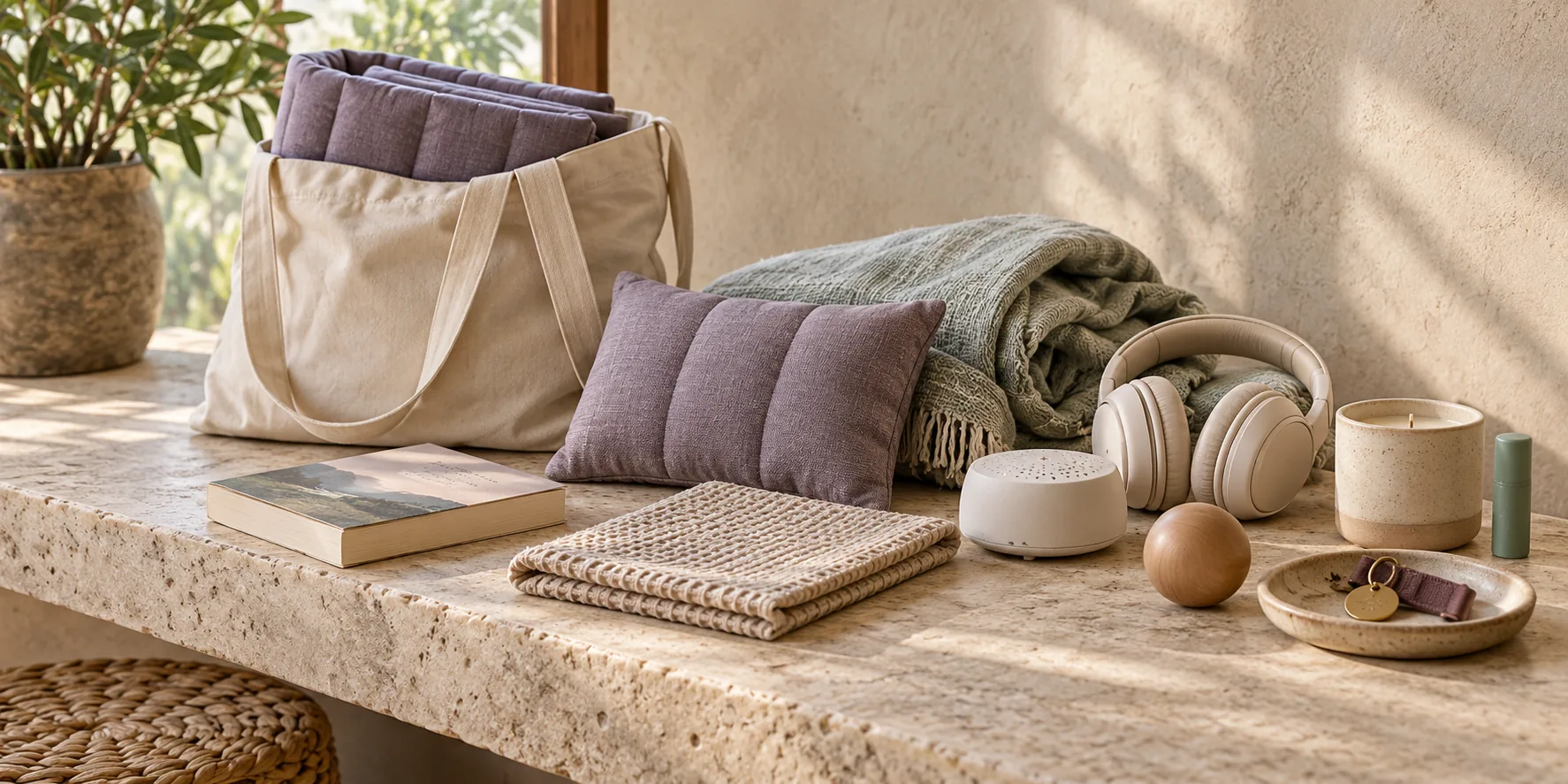
A calm portable comfort collection with a tote, compact weighted lap pads, a weighted pillow, soft fabrics, headphones, a sound machine, a book, a wooden massage ball and a pet tag.
Prepare a soft landing

Keep comfort within reach.

A small, liftable kit makes support easier to choose when thinking feels hard.

  • Compact lap pad or weighted pillow
  • Cooling or soothing fabric
  • Headphones or a small sound machine
  • Familiar audio, book or simple puzzle
  • Massage ball or hand comfort tool
  • A scent option only if it is safe for you and your pets
  • A plan for quiet company—or protected privacy
Comfort is not avoidance

You can soothe first and process later.

Regulation can give you more capacity to decide what needs attention. You do not have to earn care by reaching the edge of what you can tolerate.

When soothing is not enough

Different or dangerous needs help.

Seek urgent medical help for chest pain, severe trouble breathing, new weakness or numbness, loss of consciousness, or symptoms that are sudden, severe or meaningfully different from your usual pattern.

If you may hurt yourself or cannot stay safe, call emergency services. In the U.S., call or text 988 for immediate crisis support.

Further understanding

What do the colors of noise mean?

Sound “colors” describe how energy is spread across a range of pitches. They are not single healing frequencies. Lower frequencies sound deeper; higher frequencies sound brighter or hissier. The useful question is simply: which sound feels least demanding to you?

White noise

Energy is spread evenly across frequencies. It often sounds like steady radio static or a fan, with a brighter hiss that can help mask changing background sounds.

Pink noise

Energy decreases as frequency rises, giving each octave a more even balance. It sounds softer and deeper than white noise—often compared with steady rain.

Brown noise

Also called Brownian or red noise, it emphasizes lower frequencies even more. The result is a deeper rumble, sometimes compared with distant thunder or a strong waterfall.

Green noise

An informal label, commonly used for mid-range, nature-like sounds such as water or leaves. There is no single standardized frequency curve, so tracks with this name may sound quite different.

Black noise

Another nonstandard term. It often means near-silence, very low background sound or silence interrupted by occasional sound. Check the track rather than relying on the label.

Nature + familiar sound

Rain, ocean, forest, a familiar fan or another predictable recording may work better than a technical noise color. Consistency and personal comfort can matter more than the name.

Keep listening gentle.

Use the lowest comfortable volume, especially with headphones or during long listening periods. Continuous noise has mixed, low-quality evidence as a sleep aid, and louder or longer exposure increases the risk of hearing damage. It should mask distraction—not overpower your environment or warning sounds.

Read a little deeper

Sources + useful context.

Comfort tools are personal supports, not guaranteed treatments. These sources help separate possibility from promise.

This page offers general comfort strategies, not diagnosis or individualized medical care. Adapt for breathing, circulation, mobility, sensory, allergy and temperature needs.

Choose what fits this moment

Quiet, comfort, companionship or space.

Support the body and mind you have right now.
Back to all support →