Keep it within reach
Drawers and baskets hold daily supplies, medical items and the small things I would otherwise have to keep getting up to find.
A place for rest, recovery, family life and all the ways I still want to participate—even when my body needs something different.
Come into the nest ↓

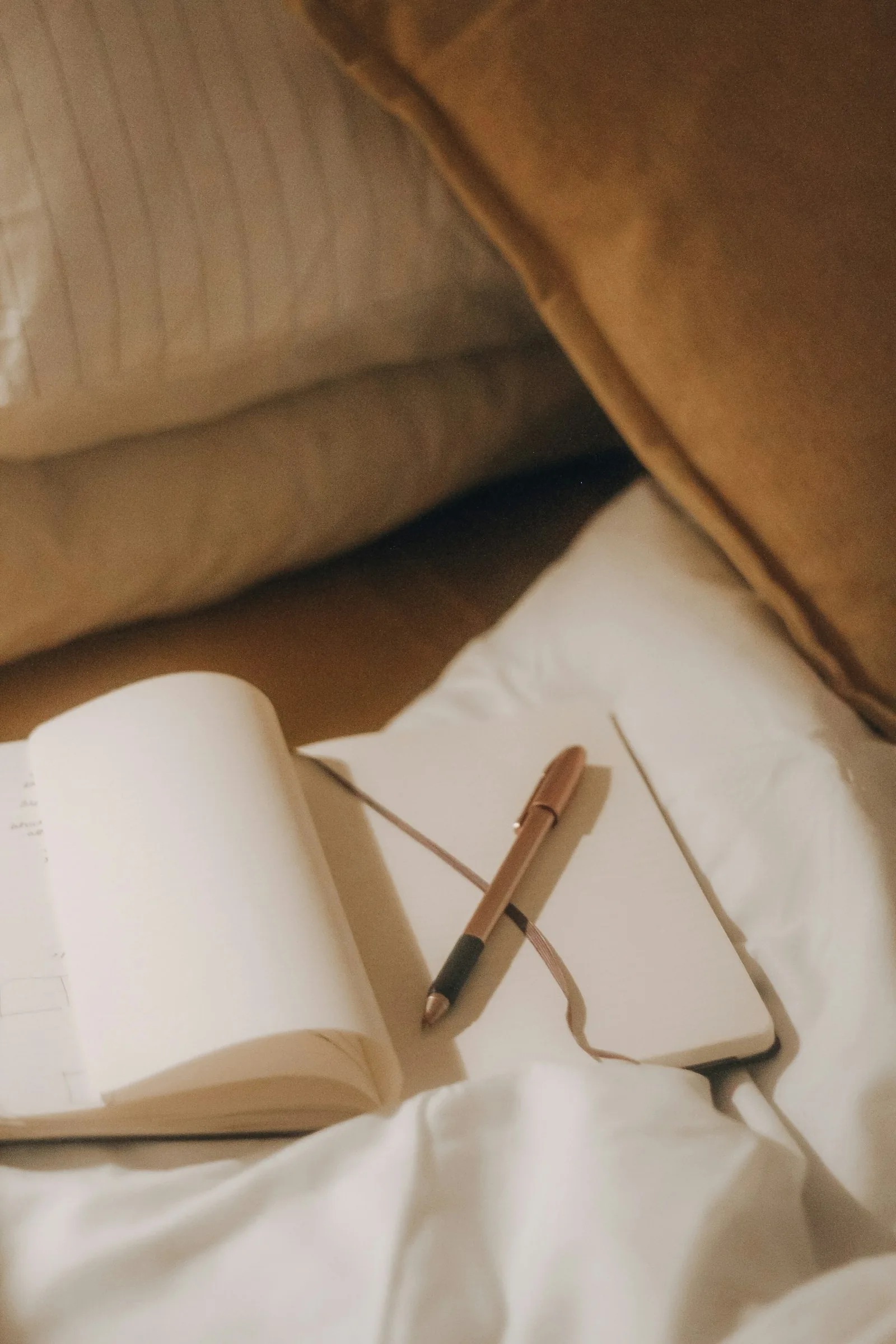
I used to go to bed—or stay in bed—because it was my favorite place to self-soothe and decompress. The problem was that my family preferred having me with them, and I hated feeling alone and isolated.
So we created a nest at one end of the couch.
I have tables with drawers filled with the things I need every day. A folding table gives me a place to work, eat, fold laundry and homeschool my children. I keep plenty of charging cords for different devices, along with a portable fan and heater so I can respond when my temperature changes.
My books and notebooks are nearby. Even little things like scissors have a place. Baskets hold my medical supplies, and they can be tucked away when company comes over.
When I want to feel connected to the outdoors, I can open the door and windows. On the days when my body needs less stimulation, I can close everything and shut the outside world down.
I even keep light dumbbells and resistance bands nearby so I can continue working on my strength when my body cannot tolerate standing.
My family and pets love the nest because they can sit with me, cuddle or play games. I have carefully cultivated it with the things that help me feel supported, comfortable and like myself.
It is a cozy corner, but it is also my recovery station. And the best part is that I still get to be involved with my family.
The nest is not designed to keep me in one spot. It is designed to keep me participating in life—even when my body is in protest.
The nest is flexible enough to hold comfort, care, ordinary family life and the work I still want to do.
Drawers and baskets hold daily supplies, medical items and the small things I would otherwise have to keep getting up to find.
A folding table becomes a desk, a place to eat, a laundry surface and a homeschool station—depending on what the day asks of me.
A portable fan and heater stay nearby so I can respond without waiting for my body to become overwhelmed.
My family and pets can sit with me, cuddle, talk or play games while I remain physically supported.
Light dumbbells and resistance bands let me work on strength even when standing is not available to me.
Books, notebooks, charging cords and favorite things make the space feel like my life—not a medical station taking over my home.
A basket, a side table, one couch corner or a rolling cart can be enough. Begin by noticing what your body repeatedly asks you to find.
What do I repeatedly get up to retrieve?
What helps when my temperature changes?
What supports pain, hydration and sensory needs?
What lets me work, parent, connect or create?
What can be stored nearby without making the space feel clinical?
If you feel better in a more removed, private environment, that is okay too. If you are able, you might even create more than one nest for different needs or parts of the day.
The key is being honest with yourself, your body and the people around you about what truly helps. For one person, recovery may mean resting in the middle of family life. For someone else, it may require quiet, darkness and a closed door. Healthcare, recovery and rest can look different for everyone.
The goal is not to create one particular kind of space. It is to create the environment that supports you.
Your nest does not have to look like mine.